
Introduction
Paying for higher education has become a major challenge for many families around the world. Tuition fees, books, accommodation, and daily expenses can quickly add up and create financial pressure for students. This is where grants for college students play a very important role. Grants are one of the best forms of financial aid because they provide money for education without the burden of repayment. Unlike loans, grants help students focus on learning instead of worrying about long-term debt.
Many students do not apply for grants simply because they do not understand how they work or believe they are not eligible. In reality, grants for college students are available for many different backgrounds, academic levels, and financial situations. Some grants are based on financial need, while others focus on academic performance, special talents, or specific fields of study. There are also grants designed to support minority students, first-generation college students, and those facing economic hardship.
This guide is written in simple English to help beginners and intermediate readers clearly understand the topic. You will learn what grants are, why they matter, how to apply step by step, and how to avoid common mistakes. By the end of this article, you will have the confidence to search, apply, and succeed in securing grants for college students to support your educational journey.
What Are Grants for College Students?
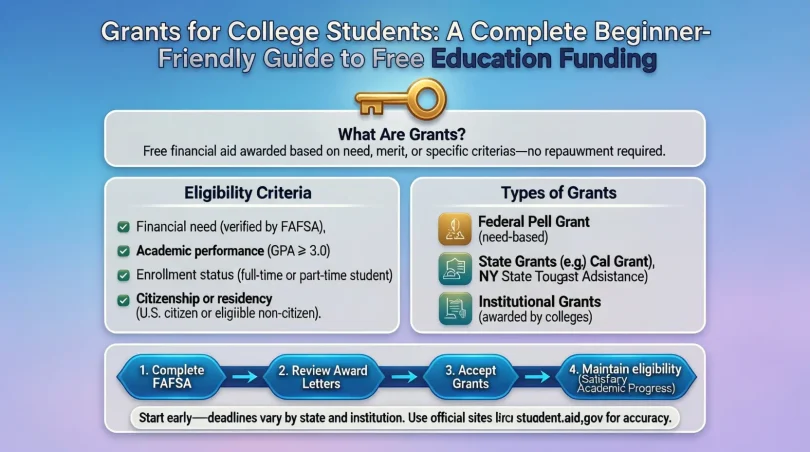
Grants for college students are financial awards given to help pay for education-related expenses. These funds usually come from governments, educational institutions, or private organizations. The most important feature of a grant is that it does not need to be repaid if the student meets the conditions.
Grants are usually awarded based on financial need, academic goals, or personal background. Many students use grants to cover tuition fees, textbooks, housing, transportation, and other study-related costs. Since grants are considered free money, they are one of the most preferred forms of financial aid.
Unlike scholarships, which often focus on merit, grants focus more on need and eligibility criteria. However, both are valuable and can sometimes be combined. Understanding grants for college students helps learners reduce financial stress and complete their education with greater peace of mind.
Why Are Grants for College Students Important?

Grants for college students are important because they make education more accessible. Many talented students are unable to attend college due to financial limitations. Grants help bridge this gap and give equal opportunities to deserving learners.
Education costs are rising every year, and student loans can create long-term debt. Grants reduce the need to borrow money and protect students from financial pressure after graduation. They also allow students to focus more on studies instead of working long hours to cover expenses.
In addition, grants promote diversity and inclusion in higher education. Special grants support students from low-income families, rural areas, and underrepresented communities. This creates a more balanced and skilled society. Overall, grants for college students support personal growth, career development, and economic stability.
Detailed Step-by-Step Guide to Getting Grants for College Students
Step 1: Understand Your Eligibility
Before applying, students should understand the eligibility requirements. These may include financial status, academic level, citizenship, or field of study. Some grants are only for undergraduate students, while others support postgraduate education.
Carefully read the criteria to avoid wasting time on grants you cannot qualify for. Knowing your eligibility helps you focus on the right opportunities and increases your success rate.
Step 2: Gather Required Documents
Most grants require documents such as income statements, academic transcripts, identification, and enrollment proof. Some may also ask for personal statements or recommendation letters.
Preparing documents early saves time and prevents last-minute stress. Make sure all information is accurate and up to date.
Step 3: Complete Financial Aid Forms
Many grants for college students require official financial aid forms. These forms help organizations understand your financial need. Fill them out carefully and double-check all details.
Mistakes or missing information can delay or reject your application. Always submit forms before deadlines.
Step 4: Search for Suitable Grants
Students should explore grants offered by governments, colleges, and private institutions. Each grant has unique conditions and benefits. Applying for multiple grants increases your chances of receiving support.
Organize your search by deadlines and requirements to stay on track.
Step 5: Write a Strong Personal Statement
Some grants require a personal statement explaining your goals, challenges, and why you deserve support. Be honest and clear. Share your educational dreams and how the grant will help you achieve them.
Avoid copying content and keep your writing simple and genuine.
Step 6: Submit Applications on Time
Deadlines are very important when applying for grants for college students. Late submissions are usually not accepted. Mark deadlines on a calendar and submit applications early if possible.
Keep copies of all submissions for future reference.
Step 7: Follow Up and Stay Organized
After submission, track your applications and watch for updates. Some organizations may request additional information. Respond quickly to avoid delays.
Staying organized helps you manage multiple applications smoothly.
Benefits of Grants for College Students
- No repayment required after graduation
- Reduces student loan dependency
- Supports students from low-income families
- Encourages higher education access
- Helps cover tuition and living costs
- Reduces financial stress during studies
- Promotes academic focus and success
Disadvantages and Risks
- Limited availability and high competition
- Strict eligibility requirements
- Application process can be time-consuming
- Deadlines must be carefully managed
- Some grants require maintaining academic performance
Common Mistakes to Avoid
Many students make avoidable mistakes when applying for grants for college students. One common error is missing deadlines. Even a strong application will be rejected if submitted late.
Another mistake is not reading instructions properly. Each grant has specific requirements, and ignoring them can lead to disqualification. Providing incorrect or incomplete information is also a major issue.
Some students apply for too few grants, reducing their chances. Others fail to keep copies of applications and documents. Avoid these mistakes by staying organized, reading carefully, and applying early.
FAQs About Grants for College Students
What is the difference between grants and loans?
Grants do not need to be repaid, while loans must be paid back with interest. Grants are a safer option for students.
Can international students apply for grants?
Some grants are available for international students, but many are limited to citizens or residents. Always check eligibility rules.
Do grants cover all college expenses?
Grants may cover tuition, books, or living costs, but rarely all expenses. Students often combine grants with other aid.
Can I apply for multiple grants at once?
Yes, applying for multiple grants for college students increases your chances of receiving financial support.
Are grants taxable?
In many cases, grants used for education expenses are not taxable. Rules may vary depending on location.
What happens if I fail a course?
Some grants require maintaining academic performance. Failing a course may affect future eligibility.
Expert Tips and Bonus Points
Start researching grants early, even before college admission. Early planning gives you more options and time. Keep a dedicated folder for all documents and deadlines.
Apply every year, as many grants require renewal. Improve your writing skills to create strong personal statements. Stay honest and avoid exaggeration.
Seek guidance from academic advisors or financial aid offices. Their experience can help you find suitable grants for college students and avoid errors.
Conclusion
Grants for college students are a powerful tool for making higher education affordable and accessible. They provide financial support without the stress of repayment, allowing students to focus on learning and personal growth. With proper planning, research, and organization, students from various backgrounds can benefit from these opportunities.
Understanding eligibility, preparing documents, and following application steps carefully can greatly improve success rates. While competition may be high, persistence and attention to detail make a big difference. Avoiding common mistakes and applying early further strengthens your chances.
Education is an investment in the future, and grants help remove financial barriers along the way. By using the knowledge shared in this guide, students can confidently pursue grants for college students and move closer to achieving their academic and career goals.