
Introduction
Education is one of the most powerful tools for personal and professional growth. However, rising tuition fees, book costs, and living expenses make quality education difficult for many students. This is where scholarships and education grants play a life-changing role. They help students continue their studies without the heavy burden of loans or long-term debt. For beginners and intermediate learners, understanding how these funding options work can open doors to opportunities that once felt impossible.
Many students believe scholarships are only for top scorers or wealthy institutions, but that is not true. Today, scholarships and education grants are available for students from different backgrounds, academic levels, and financial situations. Whether you are a school student, college learner, or planning higher studies abroad, there are funding options designed specifically for you.
This guide is written in simple English to help you clearly understand the full process. You will learn what scholarships and grants are, why they matter, how to apply step by step, and how to avoid common mistakes. The goal is to give you confidence and clarity so you can take action.
By the end of this article, you will have a complete roadmap to finding, applying for, and winning scholarships and education grants. If you are serious about reducing education costs and building a better future, this guide is for you.
What Are Scholarships and Education Grants?
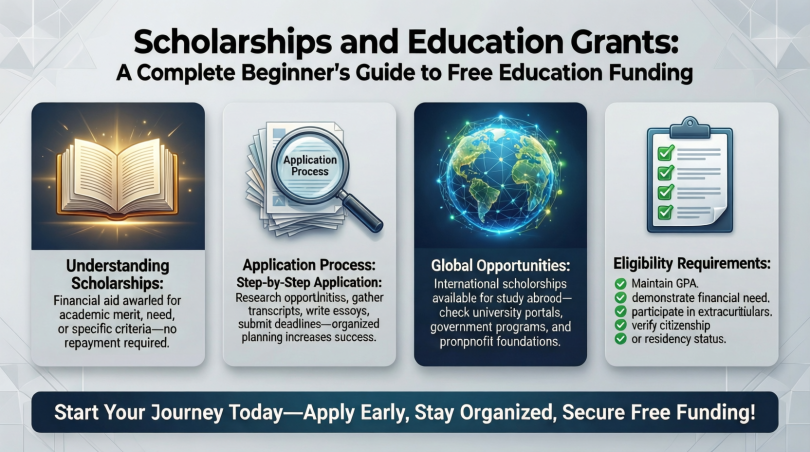
Scholarships and education grants are financial aids given to students to support their education. Unlike loans, they do not need to be repaid. This makes them one of the best funding options for students worldwide.
A scholarship is usually awarded based on merit, talent, or achievement. This can include academic performance, sports skills, creative abilities, or leadership qualities. Grants, on the other hand, are often need-based. They are given to students who require financial support due to low income or special circumstances.
Both scholarships and grants can cover different expenses such as tuition fees, books, accommodation, or living costs. Some fully funded programs cover everything, while others provide partial support.
In simple words, scholarships reward potential and effort, while grants focus on financial need. Together, they make education accessible to millions of students every year.
Why Are Scholarships and Education Grants Important?

The importance of scholarships and education grants goes far beyond financial help. They create equal opportunities and encourage learning across all social levels.
First, they reduce the stress of education expenses. Students can focus on learning instead of worrying about money. This often leads to better academic performance and personal growth.
Second, scholarships motivate students to work harder. When learners know their efforts can be rewarded, they feel encouraged to improve their skills and grades.
Third, education grants support students who might otherwise drop out due to financial problems. This helps reduce education gaps and promotes social development.
Finally, these funding options help build a skilled workforce. Educated individuals contribute positively to society, the economy, and innovation.
Detailed Step-by-Step Guide to Applying for Scholarships and Education Grants
Step 1: Understand Your Eligibility
Before applying, carefully check eligibility criteria. These may include academic level, age, nationality, subject of study, or income level.
Make a list of scholarships and grants that match your profile. This saves time and increases your chances of success.
Step 2: Research Available Opportunities
Spend time researching trusted sources such as educational institutions, government programs, and private organizations.
Create a simple document to track deadlines, requirements, and benefits of each opportunity.
Step 3: Prepare Required Documents
Most applications require similar documents. These may include academic transcripts, identity proof, income certificates, and recommendation letters.
Keep both digital and printed copies ready. Proper organization reduces last-minute stress.
Step 4: Write a Strong Personal Statement
Your personal statement is your voice. Explain your goals, achievements, and why you deserve the scholarship or grant.
Be honest, clear, and focused. Avoid copying content from others.
Step 5: Submit Applications on Time
Deadlines are strict. Late applications are usually rejected without review.
Submit your forms early to avoid technical issues or mistakes.
Step 6: Prepare for Interviews if Required
Some programs include interviews. Practice common questions and speak confidently about your goals and background.
Good communication skills can leave a strong impression.
Benefits of Scholarships and Education Grants
- Reduce or eliminate education costs
- No repayment required
- Encourage academic and personal excellence
- Support students from low-income backgrounds
- Improve access to quality education
- Reduce dependence on student loans
- Increase career and networking opportunities
Disadvantages and Risks
- High competition for limited funding
- Strict eligibility requirements
- Time-consuming application process
- Some grants have usage restrictions
- Risk of missing deadlines
- Limited funding duration
Common Mistakes to Avoid
Many students miss opportunities due to simple errors. One common mistake is applying without checking eligibility. This wastes time and effort.
Another issue is submitting incomplete applications. Missing documents can lead to instant rejection.
Poorly written personal statements also reduce chances. Avoid generic content and focus on your unique story.
Ignoring deadlines is another major problem. Always set reminders and submit early.
Finally, relying on only one application is risky. Apply for multiple scholarships and education grants to increase success.
FAQs About Scholarships and Education Grants
1. Are scholarships and grants only for top students?
No. Many programs focus on financial need, leadership, or community service, not just high grades.
2. Can I apply for multiple scholarships at once?
Yes. Applying for multiple opportunities increases your chances of receiving funding.
3. Do scholarships cover full education costs?
Some are fully funded, while others provide partial support depending on the program.
4. Are education grants taxable?
In many cases, grants used for tuition are not taxable, but rules vary by region.
5. Can working students apply for grants?
Yes. Many grants allow part-time work alongside studies.
6. What happens if I lose eligibility later?
Some programs may stop funding if requirements are not met, so always follow the rules carefully.
Expert Tips and Bonus Points
Start early and stay organized. Early preparation gives you more options and less pressure.
Customize each application. Avoid using the same personal statement everywhere.
Ask for recommendation letters in advance. Give referees enough time to write strong letters.
Keep improving your profile. Volunteering, internships, and skill development add value.
Most importantly, never give up. Rejections are common, but persistence pays off.
Conclusion
Scholarships and education grants are powerful tools that turn educational dreams into reality. They remove financial barriers and give students the freedom to focus on learning, growth, and future goals. For beginners and intermediate learners, understanding these opportunities is the first step toward a successful academic journey.
This guide explained what scholarships and grants are, why they matter, how to apply step by step, and how to avoid common mistakes. With proper planning, research, and dedication, anyone can improve their chances of receiving funding.
Education is an investment in yourself. When supported by scholarships and grants, that investment becomes lighter and more achievable. Start your search today, prepare carefully, and take action with confidence. Your future is worth the effort.