
Introduction
Education is one of the most powerful tools for building a better future. However, for many students and families, the cost of education can be a serious challenge. Tuition fees, books, transport, and living expenses often make learning feel out of reach. This is where government education grants play a vital role. These grants are designed to support students who want to study but lack enough financial resources. Unlike loans, grants usually do not need to be repaid, which makes them highly valuable.
Government education grants help millions of students continue their studies every year. They are available for school, college, university, technical training, and sometimes even online learning. Students from low-income families, minorities, people with disabilities, and high-achieving learners can all benefit. In many countries, these grants are a key part of national education policies.
In this guide, you will learn everything you need to know about government education grants. The article explains what they are, why they matter, how to apply step by step, and how to avoid common mistakes. It is written in simple English so beginners can easily understand, while still offering useful insights for intermediate readers. If you want to reduce education costs and invest in your future, this guide will help you move forward with confidence.
What is Government Education Grants?
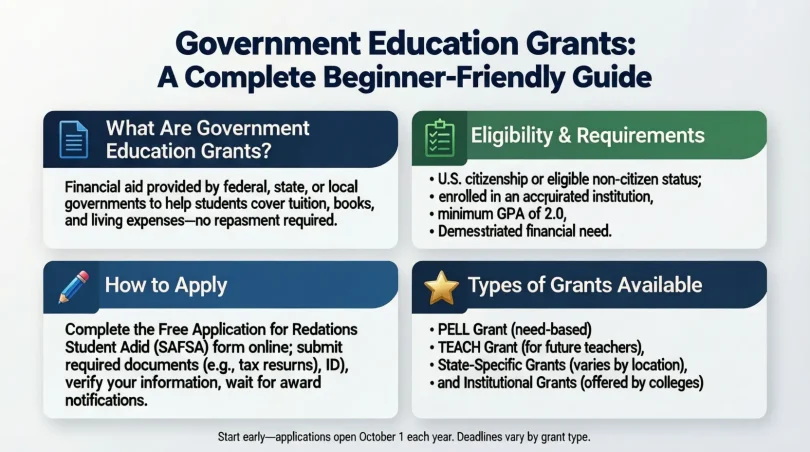
Government education grants are financial awards provided by federal, state, or local governments to support students in their educational journey. These grants are meant to reduce the financial burden of education and increase access for everyone. In most cases, students do not have to repay the grant as long as they meet the basic requirements.
These grants can cover different types of expenses. Some grants pay for tuition fees, while others help with books, housing, meals, or transportation. Certain programs focus on specific groups, such as low-income students, women, rural learners, or students studying critical subjects like science or healthcare.
Government education grants are different from scholarships and loans. Scholarships are often merit-based and offered by private or public organizations. Loans must be repaid with interest. Grants, on the other hand, are need-based or goal-oriented and are funded by public money. This makes them one of the safest and most trusted forms of education funding.
Why is Government Education Grants Important?

Government education grants are important because they promote equal access to education. Not every student starts life with the same financial advantages. Grants help close this gap and give talented learners a fair chance to succeed.
Another reason these grants matter is economic growth. Educated citizens contribute more effectively to society. They earn better incomes, pay more taxes, and rely less on social support. By investing in education, governments invest in long-term national development.
These grants also reduce student debt. Many graduates struggle for years because of education loans. Grants lower or remove the need for borrowing, allowing students to focus on learning instead of worrying about money. In addition, grants encourage enrollment in high-demand fields, helping countries meet workforce needs.
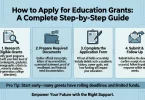
Detailed Step-by-Step Guide
Step 1: Understand Your Eligibility
The first step is to check whether you qualify for government education grants. Eligibility often depends on income level, academic performance, age, citizenship, and chosen field of study. Some grants are only for full-time students, while others accept part-time learners.
Step 2: Research Available Grants
Different governments offer different grant programs. Some are national, while others are regional or local. Spend time researching which grants match your profile. Make a list and note their deadlines and requirements.
Step 3: Gather Required Documents
Most applications require documents such as proof of income, academic records, identification, and admission letters. Make sure all documents are accurate and up to date. Missing paperwork is a common reason for rejection.
Step 4: Complete the Application Form
Fill out the application carefully. Provide honest and clear information. Double-check spelling, numbers, and personal details. A small mistake can delay or cancel your application.
Step 5: Write a Strong Personal Statement
Some grants ask for a personal statement. This is your chance to explain your goals and financial need. Be clear, sincere, and focused. Explain how the grant will help you succeed.
Step 6: Submit Before the Deadline
Always submit your application early if possible. Late submissions are usually not accepted. Keep copies of everything you submit for future reference.
Step 7: Follow Up and Respond
After submission, check your email or portal regularly. You may be asked for additional information. Respond quickly to avoid delays.
Benefits of Government Education Grants
- Reduce or eliminate tuition costs
- No repayment required in most cases
- Increase access to quality education
- Support students from low-income families
- Encourage study in important fields
- Reduce student loan debt
- Improve career opportunities
Disadvantages / Risks
- Limited funding availability
- Strict eligibility requirements
- Competitive application process
- Complex paperwork
- Deadlines can be difficult to manage
- Some grants require academic performance maintenance
Common Mistakes to Avoid
Many students miss out on government education grants because of simple mistakes. One common error is not researching enough options. Students often apply for only one grant when many are available.
Another mistake is ignoring deadlines. Late applications are usually rejected automatically. Incomplete forms are also a major issue. Always review your application before submission.
Providing incorrect information can cause serious problems. Even small errors can lead to disqualification. Finally, some students give up after one rejection. Persistence is important because grant availability changes every year.
FAQs
What are government education grants used for?
Government education grants are used to cover education-related expenses such as tuition, books, housing, and sometimes transportation. The exact use depends on the specific grant program.
Do I need to repay government education grants?
In most cases, no repayment is required. However, you must follow the rules of the program, such as maintaining enrollment and academic progress.
Can part-time students apply for grants?
Some grants accept part-time students, but many are designed for full-time learners. Always check the eligibility criteria before applying.
Are government education grants only for low-income students?
Not always. While many grants focus on financial need, others are based on merit, field of study, or special categories like disability or public service.
How competitive are these grants?
Competition varies by program. Popular grants with high funding limits are often very competitive, while smaller or local grants may have fewer applicants.
Can I apply for more than one grant?
Yes, in many cases you can apply for multiple grants. However, there may be limits on how much total funding you can receive.
Expert Tips & Bonus Points
Start your research early and stay organized. Create a calendar with deadlines and reminders. Always read instructions carefully and tailor each application to the specific grant.
Seek guidance from school counselors or education offices. They often have updated information and helpful advice. Keep improving your academic record, as good performance increases your chances.
Finally, treat grant applications as an investment in your future. Take them seriously and give each one your best effort.
Conclusion
Government education grants are a powerful resource for students who want to achieve their educational goals without heavy financial stress. They open doors to learning opportunities that might otherwise remain closed. By reducing costs and debt, these grants allow students to focus on gaining knowledge and skills that shape their future.
Understanding how government education grants work is the first step toward success. From eligibility checks to careful applications, each stage matters. While the process can seem complex, patience and preparation make a big difference. Avoiding common mistakes and following expert tips can greatly improve your chances.
In today’s competitive world, education is more important than ever. Government education grants help create a fair system where talent and effort matter more than money. If you are serious about your studies and willing to put in the effort, these grants can support your journey and help you build a brighter, more secure future.